Get a Free Quote

Our representative will contact you soon.
Email
Name
Company Name
Mobile
Message
0/1000

What Are the Common Types of Plastic Pelletizer Machines?

2026-02-27 11:20:00
What Are the Common Types of Plastic Pelletizer Machines?

The manufacturing and recycling of plastic materials relies heavily on specialized equipment that can transform raw polymers and waste plastics into uniform, high-quality pellets. Plastic pelletizer machines serve as the backbone of the plastics industry, converting various forms of plastic materials into standardized pellets that can be easily processed, transported, and utilized in subsequent manufacturing operations. These sophisticated machines have revolutionized how manufacturers approach plastic processing, offering enhanced efficiency, consistency, and quality control throughout the production cycle.

plastic pelletizer machines

Understanding the different types of plastic pelletizer machines available in today's market is crucial for manufacturers seeking to optimize their operations and achieve superior product quality. Each type of pelletizing equipment offers distinct advantages and is designed to handle specific materials, production volumes, and processing requirements. The selection of appropriate pelletizing technology can significantly impact production efficiency, operational costs, and the final quality of plastic pellets produced.

Underwater Pelletizing Systems

Direct Underwater Pelletizing Technology

Direct underwater pelletizing represents one of the most advanced and widely adopted technologies in modern plastic pelletizer machines. This system operates by cutting molten polymer strands directly in a water-filled chamber, immediately cooling and solidifying the pellets upon formation. The process eliminates the need for separate cooling and conveying systems, creating a streamlined and highly efficient production line that can handle high-volume operations with exceptional consistency.

The technology behind direct underwater pelletizing involves precisely controlled cutting mechanisms that operate within temperature-controlled water environments. As molten plastic is extruded through specialized die plates, rotating knives cut the material into uniform pellets while submerged water instantly cools and solidifies each piece. This immediate cooling process prevents pellet deformation and ensures dimensional accuracy, making it ideal for producing high-quality pellets for demanding applications.

Manufacturing facilities utilizing direct underwater plastic pelletizer machines benefit from reduced energy consumption, lower maintenance requirements, and improved product quality consistency. The enclosed water system also provides better dust control and creates a cleaner working environment compared to traditional air-cooling methods. Additionally, the rapid cooling achieved through water contact allows for higher production speeds and improved throughput rates.

Indirect Underwater Pelletizing Methods

Indirect underwater pelletizing systems offer an alternative approach where polymer strands are first cooled and solidified before being cut into pellets within a water environment. This method provides greater flexibility in handling different polymer types and allows for better control over pellet characteristics. The two-stage process enables manufacturers to fine-tune both the cooling and cutting phases independently, optimizing conditions for specific material requirements.

These systems excel in applications where precise temperature control during the cooling phase is critical for maintaining polymer properties. The indirect approach allows for gradual cooling, which can be beneficial for certain thermoplastic materials that are sensitive to thermal shock. Manufacturing operations processing specialty polymers or engineering-grade plastics often prefer this configuration due to its ability to preserve material characteristics while achieving consistent pellet quality.

The operational advantages of indirect underwater plastic pelletizer machines include enhanced process control, reduced risk of polymer degradation, and improved flexibility in handling various material grades. While these systems may require slightly higher initial investment compared to direct systems, they offer superior adaptability and can accommodate a broader range of processing conditions and material specifications.

Strand Pelletizing Equipment

Water Bath Strand Pelletizers

Water bath strand pelletizing represents a traditional yet highly effective approach to plastic pellet production, particularly suitable for operations requiring consistent quality at moderate production volumes. These plastic pelletizer machines operate by extruding molten polymer through multi-hole dies to form continuous strands, which are then drawn through temperature-controlled water baths for cooling and solidification before being cut into uniform pellets.

The water bath cooling process provides excellent temperature control and ensures uniform solidification across all strands simultaneously. This method is particularly effective for processing heat-sensitive polymers that require gradual cooling to maintain their molecular structure and physical properties. The controlled cooling environment prevents thermal shock and reduces internal stress within the pellets, resulting in superior product quality and enhanced downstream processing characteristics.

Modern water bath strand pelletizing systems incorporate advanced automation features, including automated strand threading, tension control systems, and integrated quality monitoring equipment. These enhancements significantly reduce manual intervention requirements while improving production consistency and reducing the likelihood of processing defects. The technology is especially well-suited for producing pellets from recycled materials, where consistent quality control is paramount for market acceptance.

Air Cooling Strand Systems

Air cooling strand pelletizing systems offer a cost-effective alternative for operations where water usage restrictions or environmental considerations make water-based cooling impractical. These plastic pelletizer machines utilize forced air circulation to cool extruded polymer strands before cutting, providing efficient heat removal while maintaining product quality standards. The air cooling approach is particularly suitable for processing certain polymer types that perform well under gradual cooling conditions.

The design of air cooling systems typically includes sophisticated temperature control mechanisms, variable-speed fans, and optimized air flow distribution patterns to ensure uniform cooling across multiple strands. These systems can be configured with heating and cooling zones to provide precise thermal management tailored to specific polymer requirements. The absence of water in the cooling process eliminates concerns about moisture absorption and reduces the complexity of downstream drying operations.

Operational benefits of air cooling strand plastic pelletizer machines include reduced water consumption, lower environmental impact, and simplified waste water treatment requirements. These systems are particularly advantageous in regions where water resources are limited or where environmental regulations restrict water usage in industrial processes. The technology also offers excellent flexibility in processing different polymer grades without cross-contamination concerns associated with water-based systems.

Hot Face Pelletizing Technology

Direct Hot Face Cutting Systems

Hot face pelletizing technology represents the pinnacle of efficiency in plastic pelletizer machines, offering unparalleled production rates and exceptional pellet quality for high-volume manufacturing operations. This advanced system cuts molten polymer directly at the die face while the material is still in its molten state, immediately followed by rapid cooling through specialized air or water systems. The elimination of strand formation and handling significantly reduces processing steps while maximizing throughput capabilities.

The precision engineering required for hot face cutting systems involves sophisticated die designs, high-speed rotating cutting mechanisms, and advanced temperature control systems that maintain optimal cutting conditions throughout continuous operation. These systems can achieve cutting speeds exceeding thousands of cuts per minute, making them ideal for large-scale production facilities requiring maximum efficiency. The direct cutting approach also minimizes material waste and reduces energy consumption compared to traditional strand-based methods.

Manufacturing facilities implementing hot face plastic pelletizer machines report significant improvements in production capacity, reduced labor requirements, and enhanced product consistency. The technology is particularly beneficial for processing commodity plastics where high volume production and cost efficiency are primary considerations. Advanced process control systems integrated into these machines provide real-time monitoring and adjustment capabilities, ensuring consistent quality even during extended production runs.

Rotary Hot Face Pelletizing

Rotary hot face pelletizing systems utilize rotating die plates combined with stationary cutting knives to achieve continuous pellet production with exceptional uniformity and quality. This configuration allows for higher cutting speeds and improved pellet shape consistency compared to traditional reciprocating cutting systems. The rotary design distributes wear more evenly across cutting surfaces, extending equipment life and reducing maintenance requirements while maintaining consistent cut quality.

The engineering sophistication of rotary systems includes precision-balanced rotating assemblies, advanced bearing systems capable of handling high-speed operation, and specialized sealing mechanisms that prevent polymer leakage while maintaining optimal cutting conditions. These plastic pelletizer machines are designed to operate continuously for extended periods with minimal downtime, making them ideal for facilities requiring maximum production availability and throughput consistency.

Operational advantages of rotary hot face pelletizing include superior pellet shape consistency, reduced cutting blade wear, and improved process stability during long production runs. The technology is particularly well-suited for processing engineering-grade plastics and specialty polymers where pellet uniformity directly impacts final product performance. Advanced control systems monitor cutting parameters in real-time, automatically adjusting operating conditions to maintain optimal pellet quality throughout the production cycle.

Specialized Pelletizing Applications

Recycling-Focused Pelletizing Systems

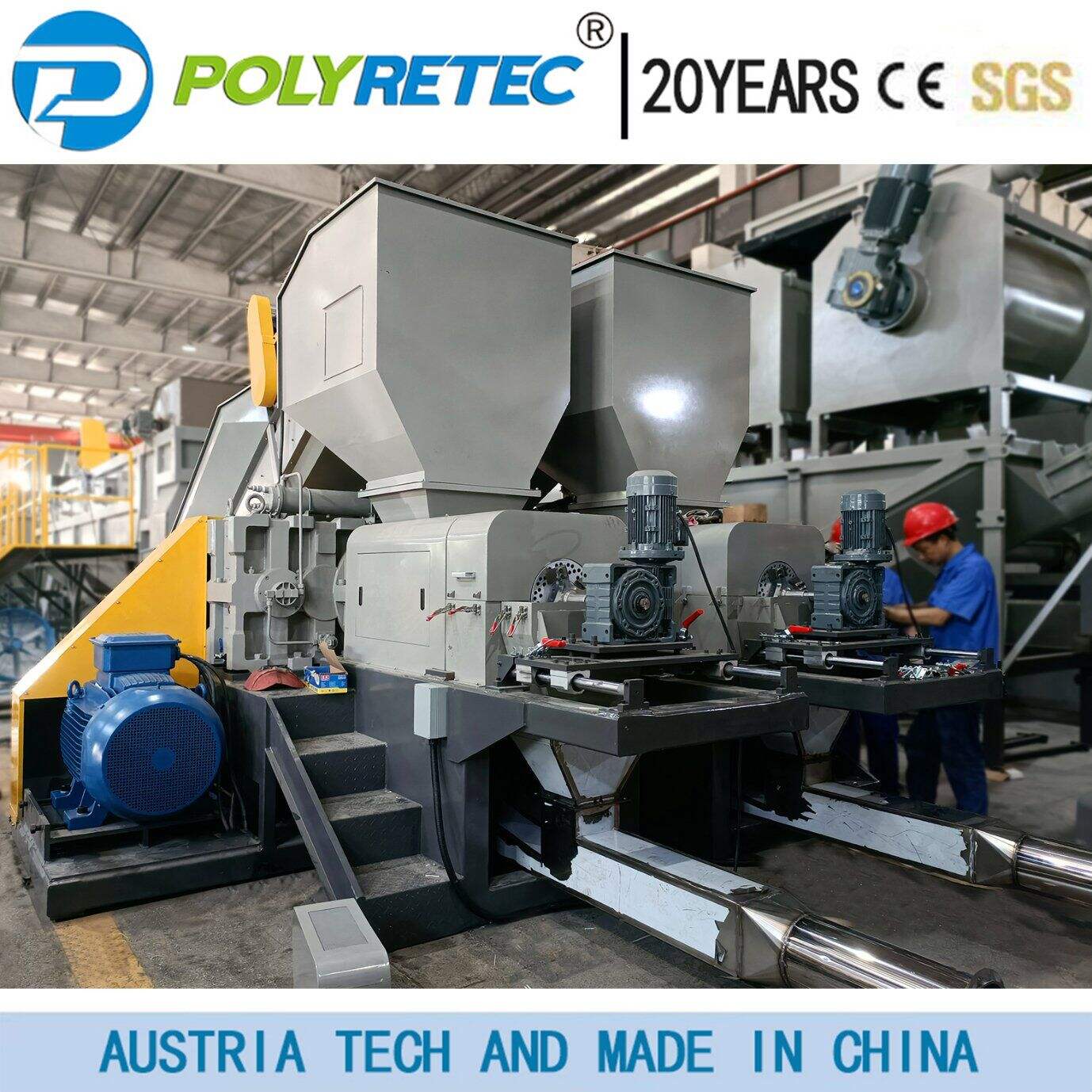
Recycling-focused plastic pelletizer machines are specifically engineered to handle the unique challenges associated with processing post-consumer and post-industrial plastic waste materials. These specialized systems incorporate enhanced filtration capabilities, contamination removal mechanisms, and flexible processing parameters to accommodate the variable quality and composition typical of recycled plastic feedstock. The design emphasis on adaptability allows these machines to process mixed plastic streams while maintaining acceptable pellet quality standards.

Advanced recycling pelletizing systems feature multi-stage filtration systems, degassing capabilities, and specialized mixing elements that homogenize recycled materials while removing contaminants and volatile compounds. These enhancements are crucial for producing recycled plastic pellets that meet quality specifications for demanding applications. The technology also incorporates real-time quality monitoring systems that adjust processing parameters automatically to compensate for variations in feedstock characteristics.

The environmental and economic benefits of recycling-focused plastic pelletizer machines extend beyond waste reduction to include significant cost savings through material recovery and reduced raw material consumption. These systems play a crucial role in circular economy initiatives, enabling manufacturers to convert waste streams into valuable raw materials for subsequent manufacturing processes. Advanced automation features reduce labor requirements while improving safety and efficiency in recycling operations.

Compounding and Masterbatch Pelletizers

Compounding and masterbatch pelletizing systems are designed to handle the precise mixing and pelletizing requirements associated with producing color concentrates, additive masterbatches, and custom polymer compounds. These plastic pelletizer machines incorporate specialized mixing technologies, precise dosing systems, and controlled cooling mechanisms to ensure uniform distribution of additives and colorants throughout the pellet matrix. The technology demands exceptional precision and consistency to meet the stringent quality requirements of masterbatch applications.

The engineering complexity of compounding pelletizers includes advanced screw designs optimized for distributive and dispersive mixing, precision temperature control systems, and specialized die configurations that promote uniform flow distribution. These systems must maintain exact color consistency and additive distribution while producing pellets with consistent size and shape characteristics. Quality control systems monitor color consistency and additive dispersion in real-time, ensuring that each pellet meets specified performance criteria.

Manufacturing facilities utilizing compounding plastic pelletizer machines benefit from the ability to produce custom formulations tailored to specific customer requirements while maintaining strict quality control standards. The flexibility of these systems allows for rapid changeovers between different formulations, enabling efficient production of small batches and specialty products. Advanced automation features reduce the risk of human error while improving production consistency and reducing waste generation during formulation changes.

Selection Criteria and Performance Optimization

Material-Specific Considerations

Selecting appropriate plastic pelletizer machines requires careful consideration of the specific polymer materials being processed, as different plastic types exhibit varying thermal, mechanical, and chemical properties that directly impact pelletizing performance. Thermoplastic materials such as polyethylene, polypropylene, and polystyrene each have unique processing requirements that influence equipment selection, operating parameters, and expected performance outcomes. Understanding these material-specific characteristics is essential for achieving optimal pelletizing results and maintaining consistent product quality.

Engineering polymers and specialty plastics often require specialized pelletizing approaches due to their unique thermal sensitivity, molecular structure, or processing characteristics. High-performance materials such as PEEK, PPS, and various fluoropolymers demand precise temperature control, specialized cutting mechanisms, and contamination-free processing environments to preserve their properties during pelletizing operations. The selection of appropriate pelletizing technology for these materials directly impacts the performance characteristics of the final plastic products.

Processing parameters for different plastic materials must be carefully optimized to achieve desired pellet characteristics while maintaining material properties and minimizing degradation risks. Factors such as melt temperature, cooling rate, cutting speed, and residence time all influence the final pellet quality and must be balanced according to specific material requirements. Modern plastic pelletizer machines incorporate advanced process control systems that allow for precise parameter adjustment and real-time optimization based on material characteristics.

Production Volume and Efficiency Factors

Production volume requirements play a crucial role in determining the most suitable plastic pelletizer machines for specific manufacturing operations, as different technologies offer varying throughput capabilities and efficiency characteristics. High-volume production facilities typically benefit from hot face pelletizing systems or advanced underwater cutting technologies that maximize throughput while maintaining consistent quality standards. These systems are designed to operate continuously with minimal downtime, making them ideal for large-scale manufacturing operations.

Medium to low-volume operations may find strand pelletizing systems more cost-effective, offering excellent flexibility and quality control while requiring lower initial capital investment. These systems provide the ability to process smaller batches efficiently while maintaining the capability to switch between different materials or formulations quickly. The modular design of many strand pelletizing systems allows for future expansion as production requirements grow.

Efficiency optimization in plastic pelletizer machines involves balancing throughput capabilities with energy consumption, maintenance requirements, and quality consistency. Modern systems incorporate energy recovery technologies, automated process optimization, and predictive maintenance capabilities that maximize operational efficiency while reducing overall production costs. The integration of advanced monitoring and control systems enables real-time performance optimization and helps identify opportunities for further efficiency improvements.

FAQ

What factors determine the choice between underwater and strand pelletizing systems

The choice between underwater and strand pelletizing systems depends primarily on production volume requirements, material characteristics, and quality specifications. Underwater plastic pelletizer machines are typically preferred for high-volume operations requiring maximum throughput and consistent quality, while strand systems offer greater flexibility for smaller batches and specialized materials. Material sensitivity to thermal shock, desired pellet characteristics, and available infrastructure also influence the selection decision.

How do hot face pelletizing systems achieve superior efficiency compared to traditional methods

Hot face pelletizing systems achieve superior efficiency by eliminating the strand formation and handling steps required in traditional methods, cutting molten polymer directly at the die face. This direct approach reduces processing steps, minimizes material handling, and enables higher cutting speeds, resulting in increased throughput and reduced energy consumption. The elimination of cooling conveyor systems and strand handling equipment also reduces maintenance requirements and operational complexity.

What maintenance considerations are important for plastic pelletizer machines

Regular maintenance of plastic pelletizer machines should focus on cutting blade condition, die plate wear, temperature control system calibration, and cooling system efficiency. Preventive maintenance schedules should include regular inspection of cutting mechanisms, cleaning of filtration systems, lubrication of moving components, and calibration of control systems. Advanced predictive maintenance technologies can help identify potential issues before they impact production, reducing unplanned downtime and extending equipment life.

How do specialized pelletizing systems handle contaminated recycled materials

Specialized recycling plastic pelletizer machines incorporate multi-stage filtration systems, degassing capabilities, and contamination removal mechanisms to process recycled materials effectively. These systems feature enhanced screening and filtration technologies that remove physical contaminants, volatile removal systems that eliminate odors and residual chemicals, and advanced mixing capabilities that homogenize recycled materials. Real-time quality monitoring systems ensure that contamination levels remain within acceptable limits throughout the pelletizing process.