Get a Free Quote

Our representative will contact you soon.
Email
Name
Company Name
Mobile
Message
0/1000

How to Improve Cooling Efficiency in Pelletizer Systems?

2026-02-07 11:11:00
How to Improve Cooling Efficiency in Pelletizer Systems?

Pelletizer cooling represents a critical component in modern plastic manufacturing processes, directly impacting product quality, production efficiency, and operational costs. Understanding how to optimize cooling systems in pelletizer operations can significantly enhance overall manufacturing performance. The effectiveness of pelletizer cooling determines the final properties of plastic pellets, including their structural integrity, surface quality, and dimensional consistency. Manufacturing facilities that prioritize advanced cooling strategies often experience reduced cycle times, improved energy efficiency, and enhanced product uniformity. As industrial demands continue to evolve, implementing sophisticated pelletizer cooling solutions becomes essential for maintaining competitive advantages in today's market.

pelletizer cooling

Understanding Pelletizer Cooling Fundamentals

Heat Transfer Principles in Pelletizer Systems

The science behind effective pelletizer cooling relies on fundamental heat transfer principles that govern thermal energy dissipation during plastic processing. Conduction, convection, and radiation work simultaneously to remove excess heat from newly formed pellets, ensuring proper solidification and dimensional stability. Temperature gradients within the cooling system directly influence the rate of heat removal, making it essential to maintain optimal thermal conditions throughout the process. Understanding these principles enables operators to identify potential bottlenecks and implement targeted improvements for enhanced cooling performance.

Water-based cooling systems typically dominate pelletizer cooling applications due to water's exceptional thermal conductivity and heat capacity properties. The cooling medium must maintain consistent temperatures while providing adequate flow rates to achieve uniform heat removal across all pellet surfaces. Thermal shock prevention becomes crucial during this phase, as rapid temperature changes can create internal stresses that compromise pellet quality. Strategic temperature control throughout the cooling cycle ensures optimal crystallization patterns and prevents common defects such as warping or cracking.

Critical Temperature Control Parameters

Precise temperature monitoring and control form the backbone of efficient pelletizer cooling operations, requiring sophisticated instrumentation and automated feedback systems. Inlet and outlet temperature differentials provide valuable insights into cooling system performance, helping operators identify optimization opportunities. Temperature uniformity across the cooling zone prevents inconsistent pellet properties that can lead to downstream processing issues. Advanced temperature control algorithms can automatically adjust cooling parameters based on real-time thermal measurements, ensuring consistent product quality.

Thermal profiling techniques enable manufacturers to map temperature distributions throughout their pelletizer cooling systems, revealing hot spots and areas of insufficient cooling. This data-driven approach facilitates targeted improvements that address specific thermal challenges. Understanding the relationship between cooling rates and final pellet properties allows operators to fine-tune their systems for optimal results. Regular thermal audits help maintain peak cooling efficiency while identifying potential maintenance needs before they impact production quality.

Advanced Cooling Technologies and Equipment

High-Performance Cooling Tank Designs

Modern pelletizer cooling systems incorporate innovative tank designs that maximize heat transfer efficiency while minimizing energy consumption and maintenance requirements. Multi-stage cooling configurations allow for precise temperature control at different phases of the cooling process, optimizing thermal gradients for specific pellet materials. Advanced tank geometries promote uniform flow patterns that eliminate dead zones and ensure consistent cooling across all pellet surfaces. These sophisticated designs often feature integrated temperature monitoring systems that provide real-time feedback for process optimization.

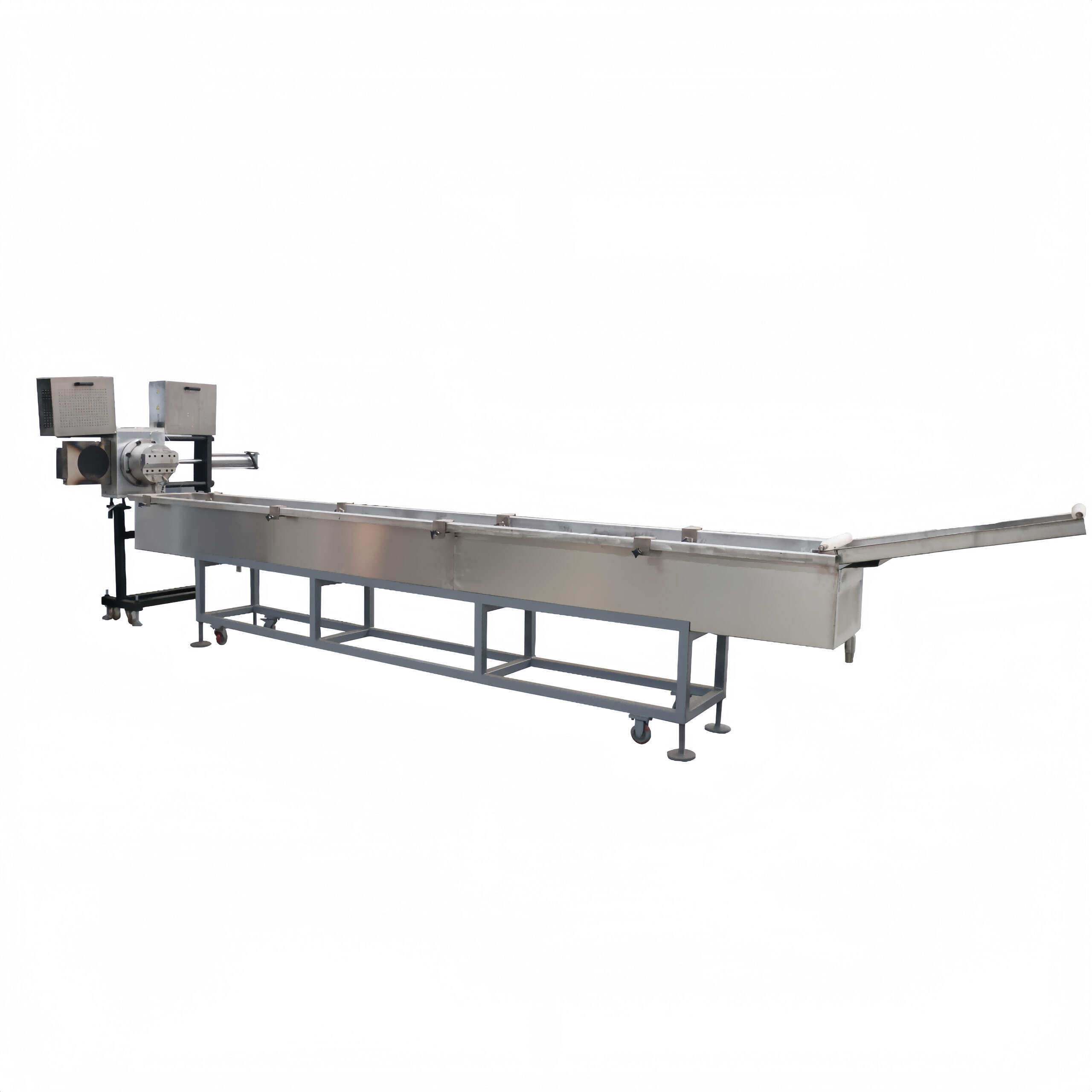
Specialized pelletizer cooling equipment incorporates features such as adjustable flow rates, variable temperature zones, and automated cleaning cycles to maintain peak performance. Stainless steel construction ensures corrosion resistance and longevity in demanding industrial environments. Heat exchanger integration allows for efficient thermal energy recovery, reducing overall energy consumption while maintaining optimal cooling performance. These advanced systems often include predictive maintenance capabilities that monitor component wear and performance degradation.

Innovative Flow Management Systems

Sophisticated flow management technologies optimize water circulation patterns within pelletizer cooling systems, ensuring uniform temperature distribution and maximum heat transfer efficiency. Variable speed pumps and automated flow control valves enable precise adjustment of cooling medium circulation based on production requirements and material characteristics. Computational fluid dynamics modeling helps engineers design optimal flow patterns that eliminate turbulence and promote consistent cooling rates. These systems often incorporate energy recovery mechanisms that reduce overall power consumption while maintaining superior cooling performance.

Advanced filtration and purification systems maintain cooling medium quality, preventing contamination that could compromise heat transfer efficiency or pellet quality. Continuous monitoring of flow rates, pressures, and temperatures provides operators with comprehensive system performance data. Automated cleaning cycles remove accumulated debris and deposits that could impede optimal flow characteristics. Smart control systems can automatically adjust flow parameters based on production schedules and material changeover requirements.

Process Optimization Strategies

Material-Specific Cooling Protocols

Different plastic materials require tailored pelletizer cooling approaches to achieve optimal final properties and processing efficiency. Crystalline polymers typically need controlled cooling rates to promote proper crystal formation, while amorphous materials benefit from rapid cooling to prevent degradation. Understanding material-specific thermal properties enables operators to develop customized cooling profiles that maximize product quality. Temperature ramping strategies can be adjusted based on polymer type, ensuring optimal crystallization kinetics and final pellet characteristics.

Additive packages and colorants can significantly influence cooling requirements, necessitating adjustments to standard pelletizer cooling protocols. Filled polymers often require extended cooling times due to altered thermal conductivity properties. Glass-filled materials may need specialized cooling techniques to prevent fiber orientation issues that could compromise mechanical properties. Regular evaluation of cooling effectiveness for different material grades helps optimize production schedules and minimize quality variations.

Energy Efficiency Enhancement Methods

Implementing energy-efficient pelletizer cooling strategies can significantly reduce operational costs while maintaining or improving product quality. Heat recovery systems capture thermal energy from the cooling process for use in other manufacturing operations, maximizing overall energy utilization. Variable frequency drives on cooling pumps allow for precise flow control while reducing energy consumption during low-demand periods. Insulation upgrades and thermal barrier improvements minimize heat loss and reduce cooling system workload.

Smart scheduling algorithms optimize cooling system operation based on production demands, ambient conditions, and energy costs. Predictive control systems anticipate cooling requirements based on upstream processing conditions, enabling proactive adjustments that maintain efficiency. Regular energy audits identify opportunities for further optimization and validate the effectiveness of implemented improvements. Integration with plant-wide energy management systems enables coordinated optimization across multiple manufacturing processes.

Maintenance and Troubleshooting

Preventive Maintenance Programs

Comprehensive preventive maintenance programs are essential for maintaining optimal pelletizer cooling system performance and extending equipment lifespan. Regular inspection schedules should include heat exchanger cleaning, pump maintenance, and filtration system servicing. Thermal performance testing helps identify gradual efficiency degradation before it impacts product quality. Predictive maintenance technologies using vibration analysis and thermal imaging can detect potential failures before they cause system downtime.

Water quality management plays a crucial role in pelletizer cooling system maintenance, requiring regular monitoring of pH, conductivity, and contamination levels. Proper chemical treatment prevents scale formation and corrosion that could compromise heat transfer efficiency. Scheduled replacement of wear components such as seals, gaskets, and pump impellers ensures continued reliable operation. Documentation of maintenance activities and performance trends facilitates optimization of maintenance schedules and identifies recurring issues.

Common Performance Issues and Solutions

Temperature inconsistencies in pelletizer cooling systems often result from flow distribution problems, heat exchanger fouling, or inadequate thermal monitoring. Systematic troubleshooting approaches help identify root causes and implement effective solutions. Flow measurement verification ensures proper cooling medium circulation, while thermal imaging can reveal heat exchanger performance issues. Regular calibration of temperature sensors maintains accurate process monitoring and control.

Pellet quality defects related to inadequate cooling typically manifest as dimensional variations, surface imperfections, or mechanical property inconsistencies. Correlation analysis between cooling parameters and product quality metrics helps identify critical control points. Statistical process control techniques enable early detection of cooling system performance drift. Rapid response protocols minimize the impact of cooling system issues on production quality and efficiency.

Integration with Overall Production Systems

Upstream Process Coordination

Effective pelletizer cooling performance depends heavily on coordination with upstream processing equipment, including extruders, melt pumps, and die systems. Consistent melt temperature and flow rate from upstream equipment enable optimal cooling system operation. Communication protocols between process control systems ensure synchronized operation across the entire production line. Real-time data sharing facilitates automatic adjustments that maintain optimal cooling performance despite upstream variations.

Material changeover procedures must consider pelletizer cooling system requirements to minimize transition time and waste. Purging protocols should account for cooling system thermal mass and residence times. Automated changeover sequences can include cooling system parameter adjustments based on new material specifications. Coordination between material handling and cooling systems ensures smooth transitions without compromising product quality.

Downstream Processing Considerations

Pelletizer cooling system performance directly influences downstream operations such as pellet conveying, screening, and packaging. Proper cooling ensures adequate pellet hardness for pneumatic conveying without excessive fines generation. Temperature uniformity prevents pellet sticking and bridging in storage hoppers and conveying systems. Moisture content control during cooling affects subsequent drying and storage requirements.

Quality control systems should monitor pellet properties immediately after cooling to verify system effectiveness. Statistical correlation between cooling parameters and final product specifications enables predictive quality control. Feedback loops from downstream operations help optimize pelletizer cooling settings for overall production efficiency. Integration with enterprise resource planning systems facilitates production scheduling based on cooling capacity constraints.

FAQ

What factors most significantly impact pelletizer cooling efficiency?

The most critical factors affecting pelletizer cooling efficiency include cooling medium temperature and flow rate, heat exchanger condition, material thermal properties, and ambient environmental conditions. Proper water temperature control typically maintains inlet temperatures between 15-25°C for optimal heat removal. Adequate flow rates ensure sufficient heat transfer coefficient while preventing excessive pressure drop. Heat exchanger cleanliness directly impacts thermal transfer efficiency, making regular maintenance essential.

How can manufacturers reduce energy consumption in pelletizer cooling systems?

Energy consumption reduction in pelletizer cooling can be achieved through heat recovery implementation, variable speed pump operation, improved insulation, and optimized flow control. Heat recovery systems can capture thermal energy for use in other processes, reducing overall plant energy requirements. Variable frequency drives on cooling pumps allow precise flow adjustment based on actual demand, eliminating unnecessary energy consumption during low-production periods.

What maintenance practices ensure long-term pelletizer cooling system reliability?

Reliable pelletizer cooling system operation requires regular heat exchanger cleaning, water quality monitoring, pump maintenance, and thermal performance verification. Scheduled cleaning prevents fouling that reduces heat transfer efficiency. Water treatment programs control pH, hardness, and biological growth that could compromise system components. Preventive maintenance schedules should include bearing lubrication, seal replacement, and alignment checks to prevent unexpected failures.

How does pelletizer cooling impact final product quality specifications?

Pelletizer cooling directly influences pellet dimensional stability, surface quality, crystallinity, and mechanical properties. Controlled cooling rates promote proper crystallization in semi-crystalline polymers, affecting final density and mechanical strength. Temperature uniformity prevents warping and dimensional variations that could cause downstream processing issues. Adequate cooling prevents pellet deformation during handling and storage, maintaining consistent bulk properties for end-use applications.