Product Overview
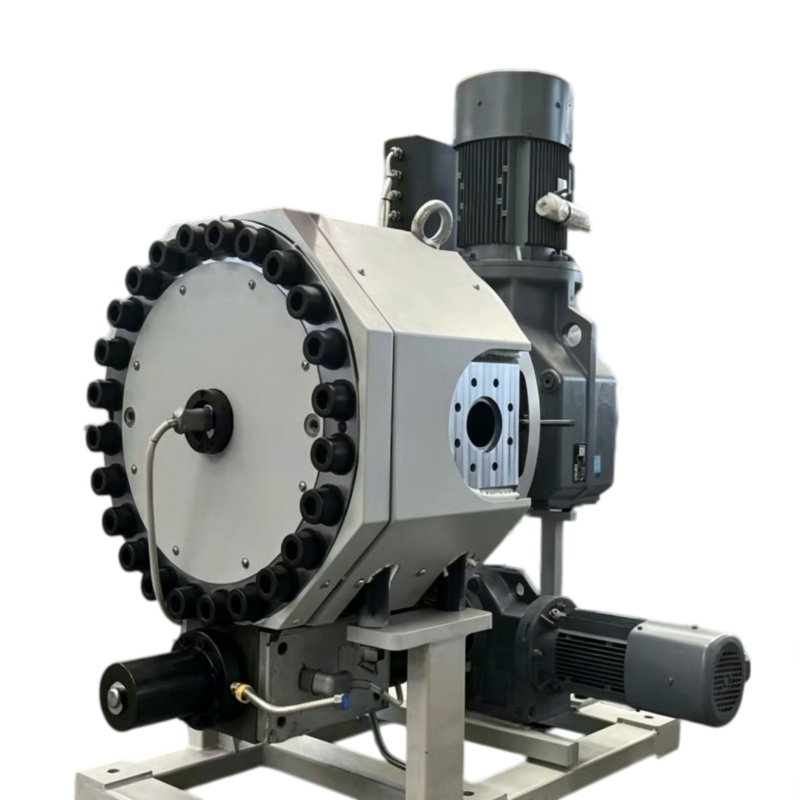
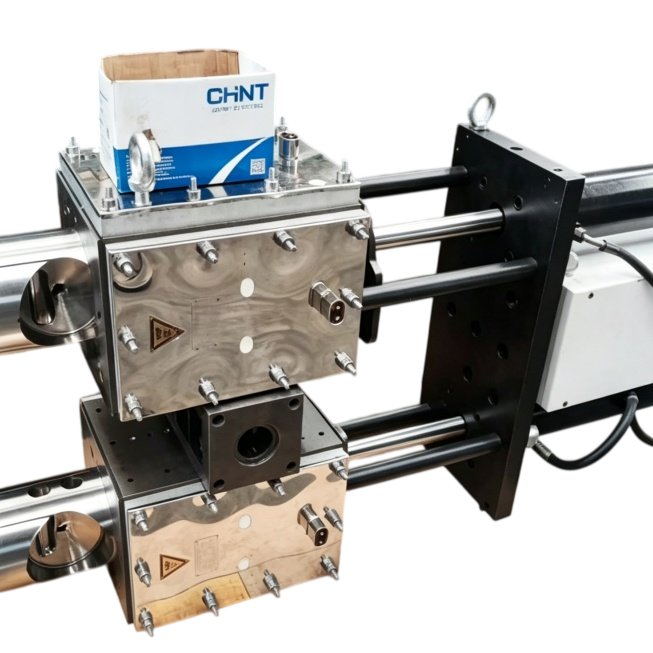
Double-Piston Four-Station Back-Flush Screen Changer
Engineered for plastic extrusion and recycling pelletizing lines, our double-piston four-station screen changer automatically alters the melt flow direction to enable online back-flushing — screen changes without stopping production. With two working positions and two back-flush positions alternating seamlessly, it delivers truly non-stop, stable continuous extrusion, making it the top choice for processing heavily contaminated recycled materials such as post-consumer films and woven-bag scrap.
Large effective filtration area — extended filtration cycles, fewer screen changes, higher throughput
Automatic PLC control with pressure protection — real-time monitoring of melt pressure; automatic alarms and interlocks for safe operation
Self-cleaning back-flush — melt pressure pushes contaminants off the screen and partially regenerates it, drastically cutting screen-consumption costs
Stable melt pressure — minimized pressure fluctuation protects expensive extruder components (screws, barrels, die heads) and extends service life
Superior melt quality — consistent filtration delivers cleaner melt and higher-quality pellets
Widely matched with HDPE / PP rigid plastic recycling pelletizing systems and all kinds of polymer extrusion lines.
Working Principle:
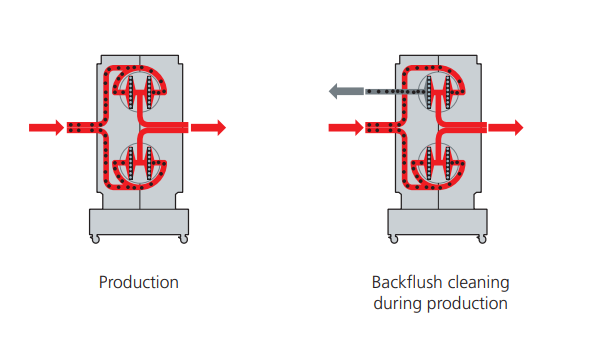
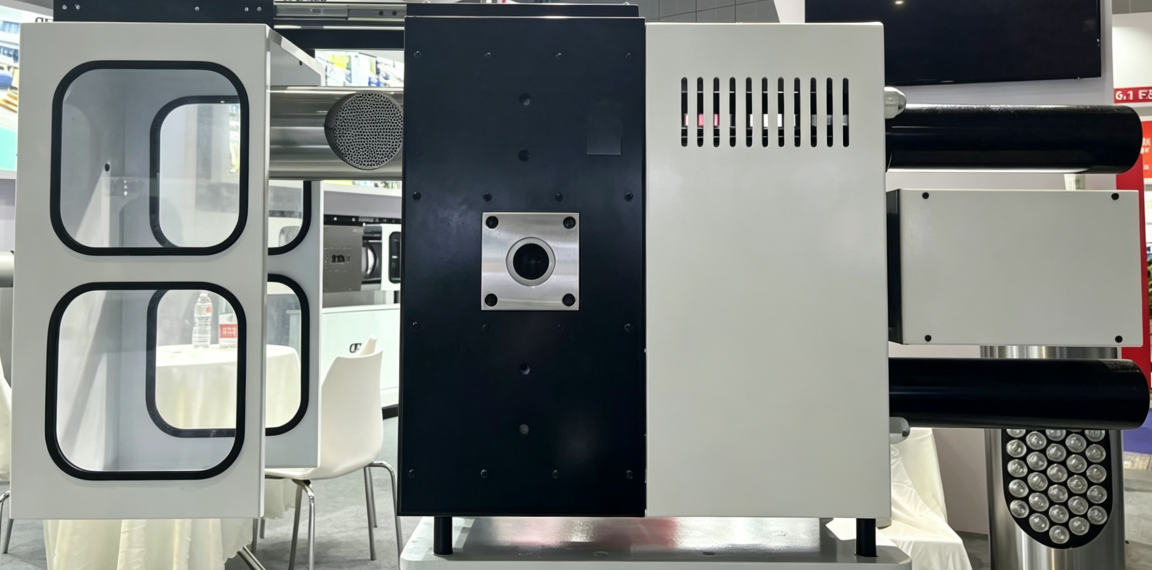
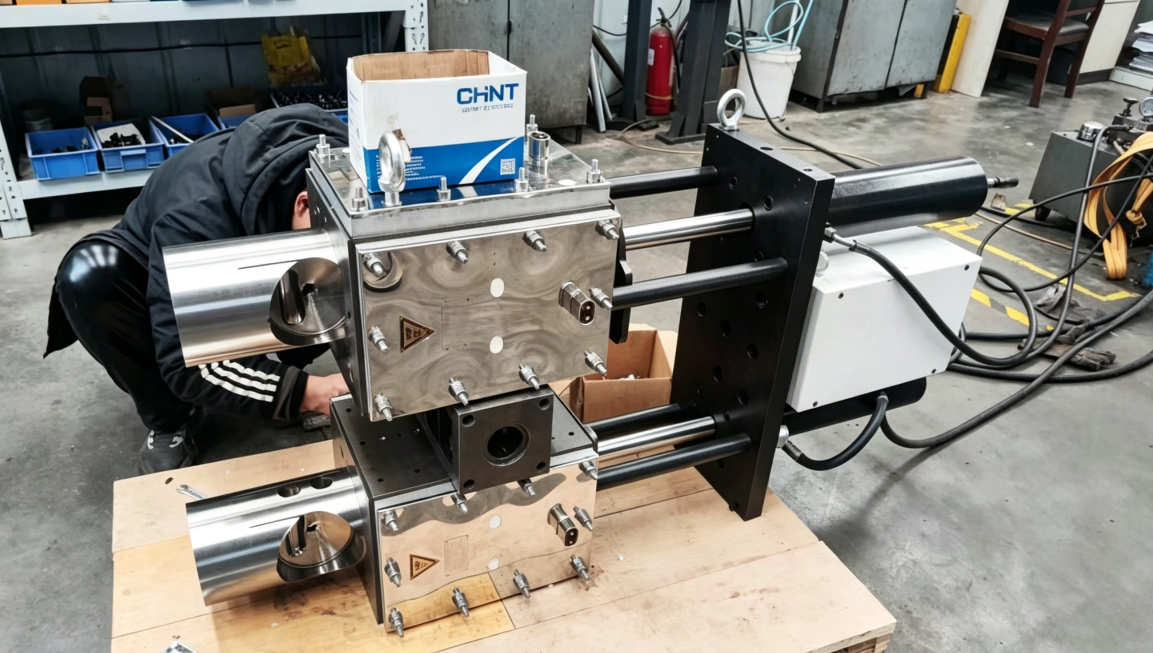
The equipment contains four independent filter working positions driven by double pistons.
1. Normal Production Status Multiple filter screens work simultaneously in the filtering position. Plastic melt flows evenly through the screens, where impurities are intercepted and retained on the screen surface while clean melt passes through to the downstream equipment — ensuring stable filtration and consistent melt quality throughout continuous production.
2. Online Back-Flushing Status When screen differential pressure rises, one single filter station switches to the back-flush position while all other positions keep normal filtering — production never pauses. Reverse-flow melt jetting back through the screen washes away the contaminants trapped on the screen surface and discharges the dirt outwards through the bleed port. The screen is partially regenerated in service, restoring filtration capacity without interrupting the main production.
3. Screen Replacement Status When a screen finally reaches its service limit, the single-station piston moves out for quick manual screen replacement, while the other stations maintain continuous filtration — no full-line stop required. The entire change-over takes only minutes, minimizing downtime and keeping your extrusion line running at full output.
Note: Only one piston executes back-flush or screen-changing action at one time. The other piston must remain in filtering status to guarantee non-stop operation.
Core Advantages
1. Non-Stop Online Back-Flushing The double-piston, four-station structural design (two stations filtering, two back-flushing) changes the melt flow path to perform screen cleaning while the line is running — zero machine halt, zero production interruption. Combined with the optional automatic screen-changing mode, the system achieves true 24-hour continuous production.
2. Perfect for High-Contamination & Recycling Materials The ideal choice for waste plastic recycling pelletizing. Recycled feedstock typically carries large amounts of impurities that quickly blind the screen; back-flushing greatly lowers screen-replacement frequency, keeps melt pressure stable, and ensures continuous, worry-free production even with the dirtiest input materials.
3. Large Filtration Area & Stable Melt Pressure The large effective screen area effectively suppresses system pressure fluctuation and upgrades melt quality and pellet consistency. Stabilized pressure also relieves impact loads on the screw, barrel, and die head — significantly extending the service life of these high-cost extruder components and reducing maintenance downtime.
4. Cost-Saving & Eco-Friendly Filter screens can be reused after back-flush cleaning — up to 10+ cycles under proper conditions. This dramatically cuts screen-consumable and waste-generation costs, lowering overall operating expenses while supporting green, sustainable recycling production.
5. Full-Automatic PLC Control with Safety Protection Fully automatic operation under PLC control, with real-time pressure monitoring, fault alarms, and interlock protection. A high-precision encoder ensures accurate piston positioning for reliable long-term running — minimal operator attention required.
Technical Specifications
Model |
Overall Dimensions L×W×H (mm) |
Screen Diameter (mm) |
Effective Screen Area (cm²) |
Capacity (kg/h) |
Heating Power (kW) |
Working Pressure (MPa) |
DHX-4-134 |
1600 × 360 × 820 |
φ134 |
564 |
1-800 |
≈16 |
≤15 |
DHX-4-170 |
2500 × 460 × 1000 |
φ170 |
907 |
1-1500 |
≈25 |
≤15 |
Application Scenarios
The non-stop back-flush screen changer is purpose-built for demanding extrusion and recycling duties, wherever melt cleanliness and production continuity matter most:
HDPE / PP rigid plastic recycling & pelletizing lines — bottles, drums, crates, and industrial rigid scrap re-granulation
Post-consumer plastic re-granulation production — films, woven bags, and mixed packaging waste with unpredictable contamination levels
Polymer extrusion processes with high impurity content — heavily contaminated feedstock where screens blind quickly and frequent changes would otherwise halt production
Extrusion lines requiring long-time non-stop continuous operation — 24/7 production where every stoppage means lost output and elevated costs
Wherever filtration is the bottleneck of your line, this is where it pays for itself.

 EN
EN