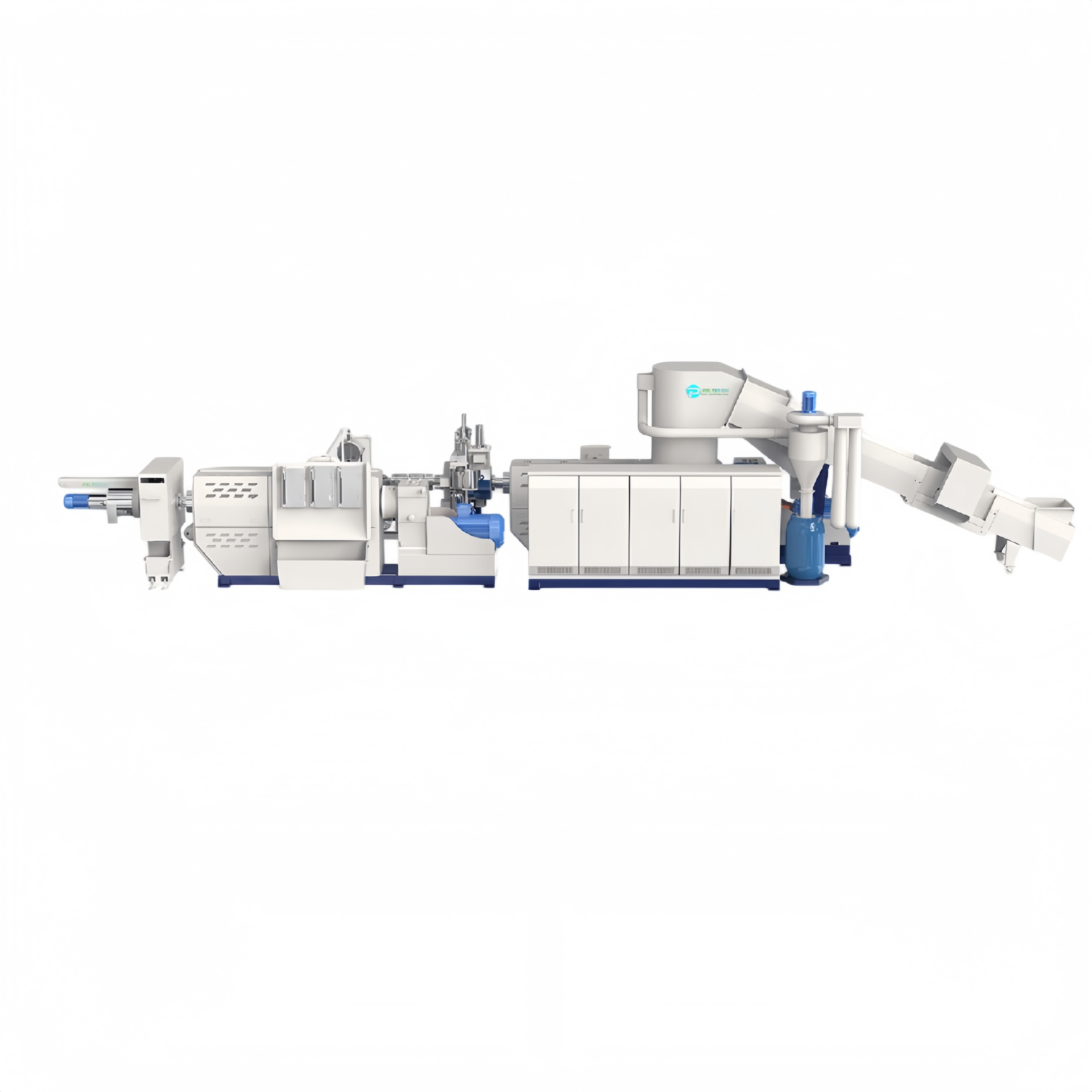
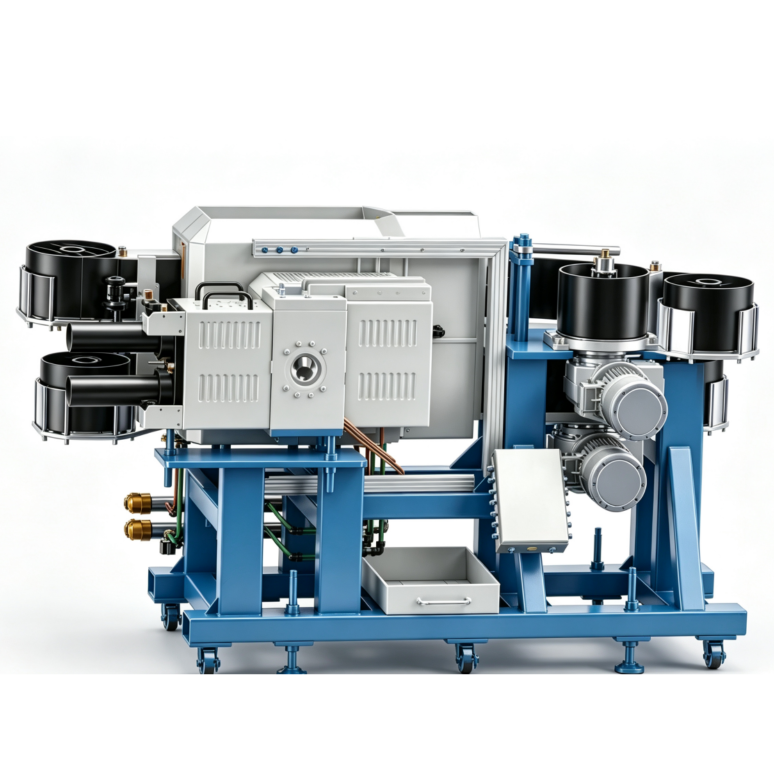
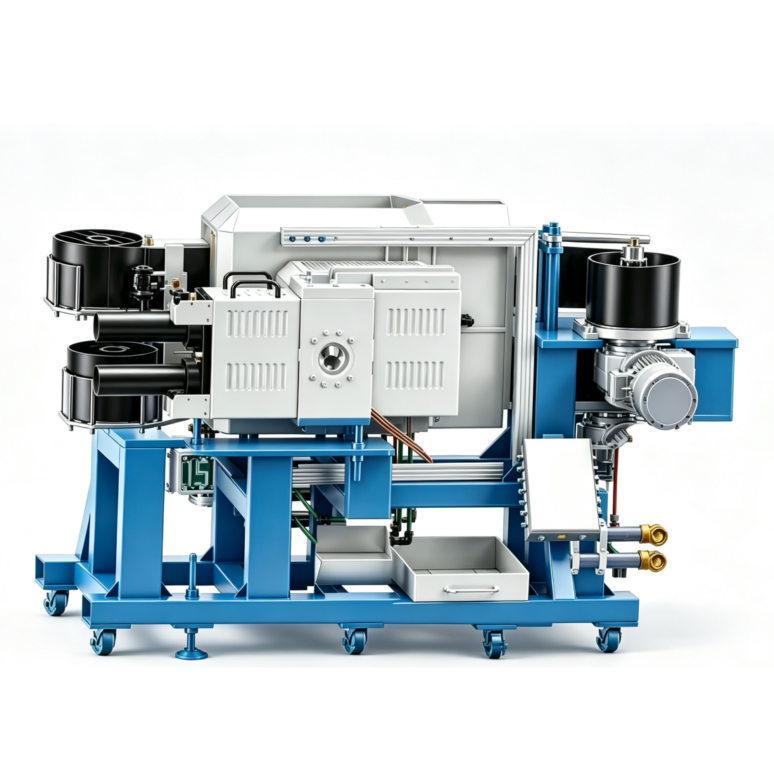
High regranulate quality, low operating costs, and fully automatic operation — that is the BMF series. Engineered for continuous plastics recycling and pelletizing lines, this automatic belt melt filter delivers uninterrupted filtration with the lowest melt loss of any filtration technology on the market — less than 0.5%.
Next-Level Filtration Technology Simplify your plastic waste recycling with pure efficiency. The BMF series combines precision filter mechanics, an integrated melt buffer system, and intelligent automatic control to deliver consistently clean melt, minimal material waste, and zero production downtime — so your line keeps running at full output while the filter takes care of itself.
Polytec Filter — Automatic Filter Fabric Change for Uninterrupted Filtration
Effective and efficient contaminant filtration is the decisive factor in plastics recycling — and this is exactly where the Polytec filter excels. Its filter fabric is changed fully automatically, with no operator intervention and no production stop.
The benefits are immediate: regranulate quality remains constantly high, while contaminants are continuously discharged out of the machine with minimal melt loss — keeping more of your good material where it belongs: in the product.
Thanks to an integrated intermediate melt container, the upstream extruder runs permanently, even during fabric change-over. Combined with stable melt pressure and consistent filtration, the result is a recycling line that simply never stops delivering clean, high-value regranulate.
Filter types
- MBF: Typical automatic belt melt filter with buffer store for the melt and a screen surface of up to 1600 cm2
- BMF-C Continuous: The double buffer configuration guarantees a continuous melt flow.
- BMF-BV Before Venting: Fine filtration before degassing.
- BMF-TH: Huge filter area of two ABMF filter units connected via melt adapters.
- BMF PET-C: Constantly high re-granulate quality by full-automatic melt filtration in double cavity technology
The BMF filter can be retrofitted from discontinuous to continuous.
- Continuous melt flow through the screen until the adjustable limit pressure of the screen has been reached and the fully automatic screen change is initiated.
- Valve closes and the space in front of the screen is depressurized. The accumulator piston is moved downwards by plastic melt and buffer volume is increased. Wedges open in parallel and release screen fixation.
- The screen is moved on by driven transport rollers until clean screen is in filter zone again.
- Wedges close and screen is fixed and sealed again.
- Valve opens and melt flows back into filter zone.
- The accumulator piston is moved upwards at an adjustable speed and adds the amount of mate-rial that was taken up during the screen change. When the accumulator piston has reached the upper end position, the screen change process is completed.
Your advantages
Automated — Fully-Automatic Filtration
The intelligent combination of precision filter mechanics and advanced control system delivers fully-automatic operation from start to finish: fabric change-over, contaminant discharge, and pressure monitoring all proceed without operator intervention.
The result is a filtration system that is practical, reliable, and genuinely cost-saving — minimal labor input, no production interruptions, and consistently high regranulate quality around the clock. Your line keeps running, your people focus on what matters, and the filter takes care of itself.
Clean. Very high filtration fineness.
Up to two filter belts can simultaneously be used. This allows an exact adjustment of different filter screen finenesses.
Permanent. Extruder operation during screen belt feed.
By storing temporarily the plastics melt, also during the screen feed, the extruder continues running and guarantees high process reliability.
Effective. Very high throughput rates.
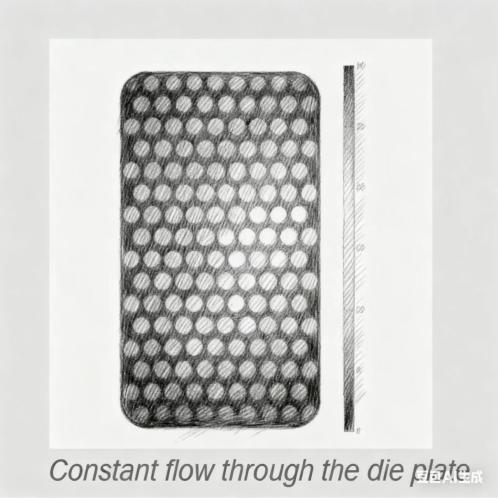
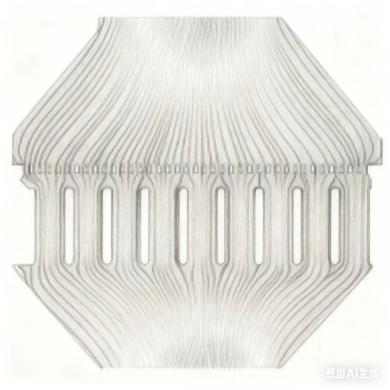
The new support plate design – consisting of grid and die plate – guarantees higher throughput, thus less pressure generation and more gentle processing.
Perfect. Homogeneity of the plastics melt.
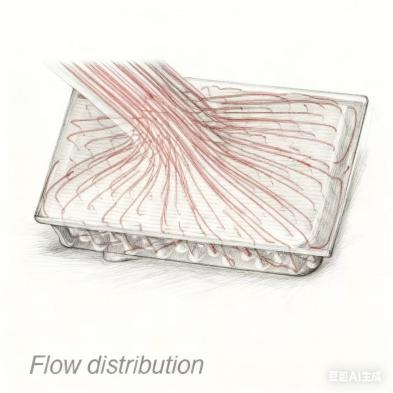
The optimized flow channel improves the melt flow considerably again without material stress.
Efficient. Very low operating costs
Besides the automatic operation of the filter with high plastics throughput, the use of filter belts with dutch weave meshes ensures low operating costs at high output.
PolyRetec/Polytec uses simulations as basis for product optimizations – example optimization grid and die plate
 |
 |
 |
| Constant flow through the die |
PlateFlow speed |
Flow distribution |
Filtration material
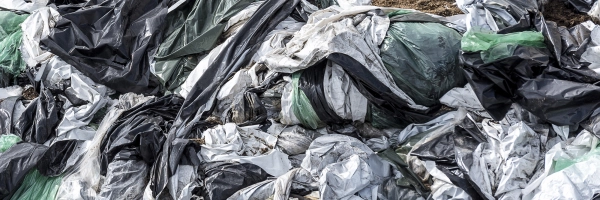
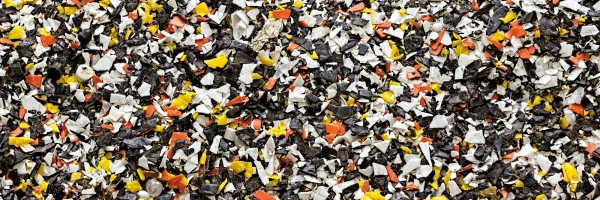
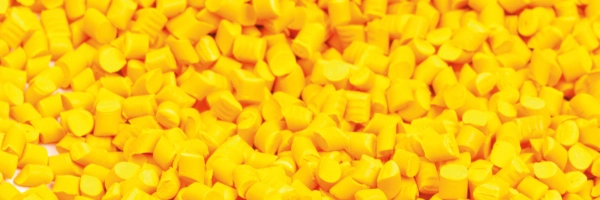
Suitable for post-consumer and post-industrial plastics waste and agricultural film.
Filter belts
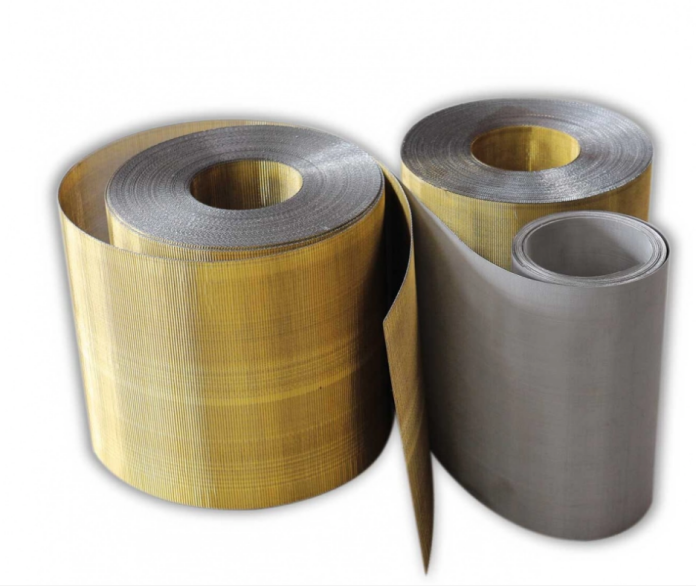
Depending on the customer requirement, different materials, dimensions, weaves and tensile stren possible.
- Filter belt roll: 20 – 25 kg, roll length up to 50 m
- Filtration fineness: 50 μm to 950 μm
- Simultaneous use of up to three filter belts with different mesh size is possible.
Technical data
- Certified. Certified according to EN 15343ff, excellent regranulate characteristics.
- Tested. Product development supported by simulations.
- User-friendly. Pleasant filter operation via central unit.
- Practical. Uncomplicated maintenance.
- Fileproof. Optimized processing process and steady process parameters.
- Successful. Screen change procedure up to every 2 minutes.
Polytec Filter |
Filter area [cm2] |
Filter area [sqin] |
Volume [Liter] |
Volume [gal] |
max. output [kg/h] |
max. output [lbs/h] |
BMF-0570-07 |
570 |
88.4 |
7 |
1.8 |
900 |
1985 |
BMF-0570-09 |
570 |
88.4 |
9 |
2.3 |
1200 |
2646 |
*Output values for LDPE depend on material and contamination.


 EN
EN